Use Cases

Start with work that AI workers can reliably own

People decide. AI handles the back-and-forth execution. These are representative operating patterns for reducing routine workload while keeping control.
1Sales / Customer Success

Draft replies for inbound inquiries

Use Gmail and internal knowledge to draft replies aligned with prior tone and response policy.

Work to delegate
Check unread emails, search related context, draft a reply, and ask the owner to review.
Expected operating state
Faster first response while keeping human review before customer-facing sends.
Read more
2Procurement / Orders

Read purchase orders and update ledgers

Extract part numbers, quantities, and delivery dates from attachments, then organize them into sheets or internal formats.

Work to delegate
Monitor email, inspect attachments, extract required fields, update spreadsheets, and request confirmation.
Expected operating state
Less manual entry and fewer copy mistakes, leaving procurement teams more time for judgment and exceptions.
Read more
3Management / Planning

Compile and share daily reports

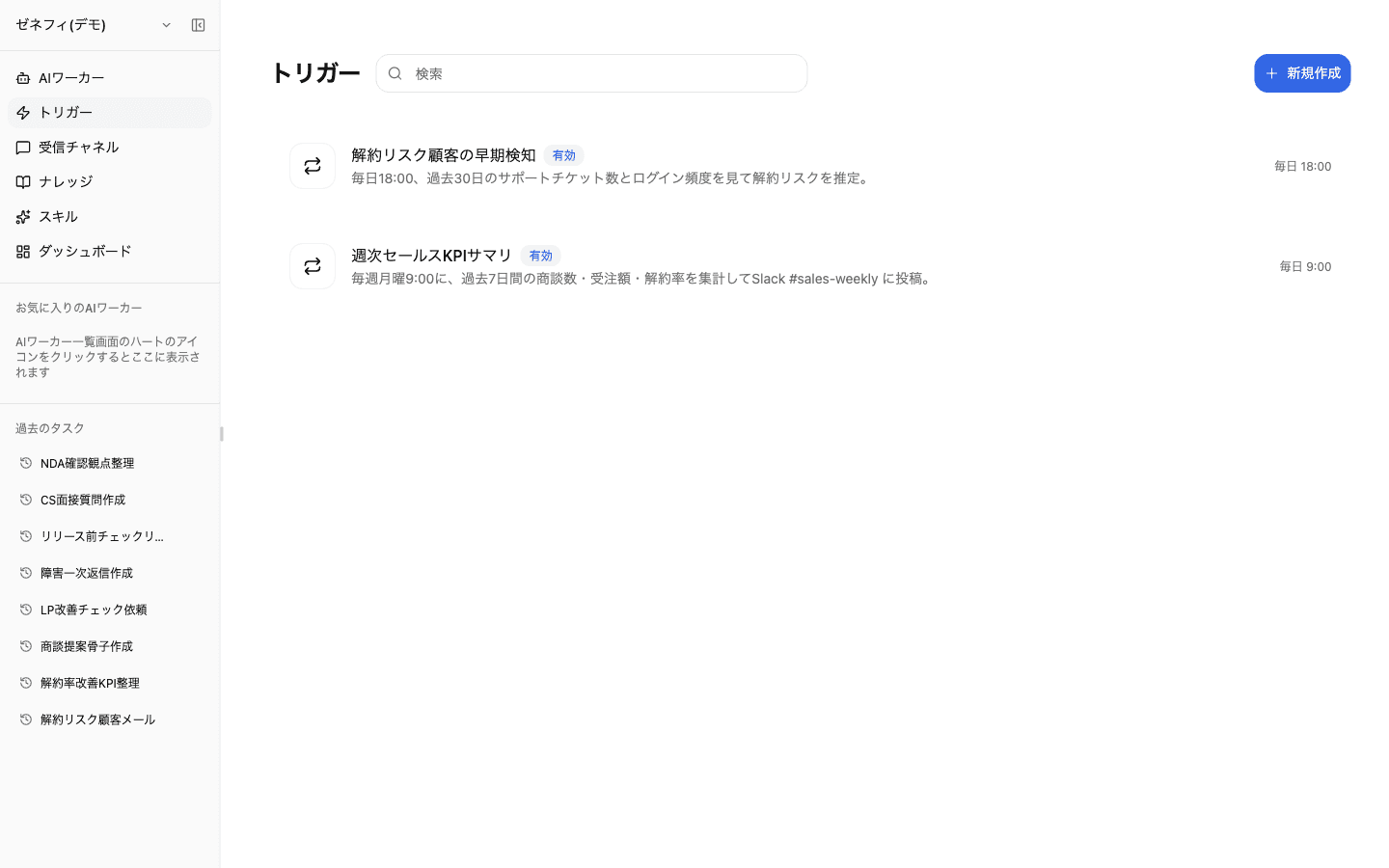
Collect numbers from SaaS tools and files, then format them into recurring reports.

Work to delegate
Fetch data, aggregate metrics, check anomalies, prepare reports, and share through Slack or email.
Expected operating state
Daily reporting becomes routine, so teams can focus on the changes that matter.
Read more

Common operating patterns

The work differs by team, but stable automation depends on a shared structure.

Start condition

Start from email, schedule, manual request, or another trigger that fits the workflow.

Business knowledge

Reference manuals, internal rules, and prior responses as knowledge.

Approval

Keep human review before external sends or important updates.

Records

Preserve instructions, execution, and results for later review.

Discuss the closest workflow for your team

The first AI worker is easiest to operationalize when the success path is clear and repeatable.